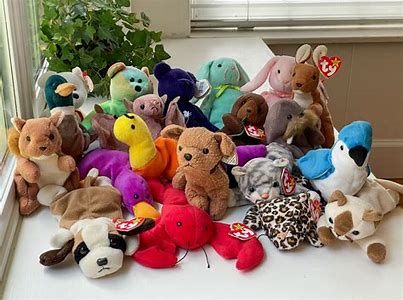
Do you mean like, Beanie Babies?

I remember all the booms, pet rocks, beanie babies, cabbage patch kids, G.I. Joe action figures and Star Wars stuff. It goes on. We are a nation of hoarders. If you don’t believe me, explain crypto currency. Nostalgia collections are pretty lasting, cars and motorcycles. Gun nuts I understand, I mean can you really stop at one? Then you have to talk about them, usually at length, well past the point of interest of non-collectors.

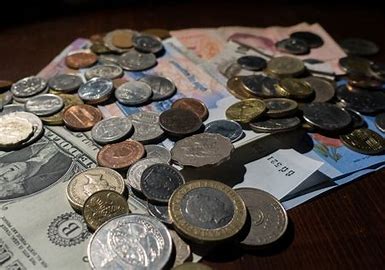
I was more interested in memories and experiences. I traveled with the Army and the memories and experiences grew, broadened my horizons. I still travel, trying to experience other cultures and food. Especially the food. It’s kind of hard to carry food back on an airplane though. So, I started collecting money from everywhere I visited. It doesn’t take up a lot of space and when I sort through them, I get to relive where I was.

I have my memorabilia from the Army and police, patches, badges, medals and uniforms, enough to fill footlockers and duffle-bags. Also, artwork from local artists or unique pieces that I could turn into art. Strangely, I don’t keep many photos, no time to stop and pose.

Daily writing prompt
Do you have any collections?

Limping in a Winter Wonderland.

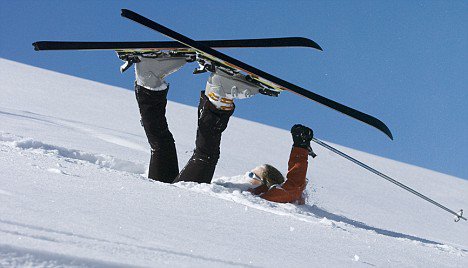
I remember when winter was magical. The first time I saw snow, I was three. I stepped off the front porch and fell through a drift that was taller than I was. Winter in the Finger Lakes was excitingly different from Mississippi. The childish delight of getting cold and wet from snow and staying out until your cheeks and ears were numb. We lived by a dairy farm and had the run of the fields while the cows were kept close. It could also be deadly, like falling through the ice on Canandaigua Lake and walking home before hypothermia set in. Our family dog saved me, that’s another story.

Now, it’s a little more painful. Jumping out of airplanes was fun but tore up my knees and back. Fighting took my hands with arthritis. Even living in Pennsylvania for nearly 25 years hasn’t made me immune to the cold. As much as I love winter sports, I can’t take the exposure much anymore. It hurts too much. Under forty degrees, my hands stop working well. By the time it hits the twenties, my legs don’t want to keep up their end of the whole body working together concept. It’s sad really.

I admit that I still enjoy the cold weather in small doses. I’ll sit in the lodge and drink something to warm me up until everyone else gets done skiing or until it’s not a good idea for me to try to ski. Whichever comes first. Raw fall weather with leaves changing color and the wind whipping around is exhilarating. But it’s painful now, so I’ll take it in smaller pieces and limp through the memories.

(Not me in the pictures, my wipeouts were much worse.)

Daily writing prompt
How do you feel about cold weather?

Personal and Collective Morality. (Morality 5)

I assert that morality, the internal compass for right and wrong, is personal. It cannot be a shared or be community standard simply because we all have different priorities, and those priorities change from day to day with our lives. When I was a teenager, I had questionable and flexible moral standards. As I grew, became a man and assumed adult responsibilities, my internal compass changed. Get married, quit chasing random women. A father, well, there go most of the toys and self-indulgent hobbies. Personal priorities are a constantly shifting patchwork and cannot be shared with the whole community.

Collective morality is a myth, or at least a mislabeling of an observed standard of conduct. If morality is internalized than community standards are ethical, external standards, enforced either by community disapproval or codified as law and punishable as such. Any conduct that is forced or enforced cannot be moral, there is no choice other than obedience or punishment. The act is simply avoidance of punishment or defiance.

There is a tendency of communities of similar standards to raise children to reflect their beliefs and standards of conduct. Christians raise their children, with varied success, to whatever standards are derived from their version of Christianity. Jews, the same, depending on their sect, or Islam. Living in the northeast, I have the handy example of the Amish. A strict sect that will expel anyone who violates the precepts of their faith and community. What the children learn from their community is what will become their internalized moral standard. It is impossible for everyone to share the same world view and priorities. If nothing else is applied, the perceived rank within a family is different Father, mother, children by age and talent.

At best, the collective standard can be the mores, customs and conventions that when viewed externally, can roughly define what a community believes. Further division occurs in different communities or subcultures. What comparisons can be made between urban and suburban cultures; nations differ significantly as well. Is there a universal standard for good and evil? Is it possible to achieve a single standard when there are cultures that believe everyone who does not share their beliefs is wrong and somehow lesser? Sadly, the answer is no. As long as one group rejects the foundational beliefs of equality, a universal definition of good and evil will be impossible.

In “Famine, affluence and morality”, (Singer 1974), Singer argues that it is a moral requirement to send any excess funds to support charities. The argument is based on an equivalence argument that breaks down once past the benefactor/recipient stage. If you send your funds as food support to an obscure African village, the chances are fairly high that the local strongman will benefit more than the intended recipient. Singer simply created a logic box and excludes the reality of his proposition. If we shift our perspective along the layers of interaction, the different moral and ethical standards are obvious

The affluent feel obligated to provide for those less fortunate, either from altruism or self-aggrandizement. Starting from the doner, the desire to donate excess funds, an obvious first world problem, comes from a need for recognition.

Practice makes perfect.

Live an interesting life and you have interesting stories. I spent a while kickboxing. It’s a lot of fun if you like collecting bruises and broken bones. Ask any fighter and they probably can’t tell you how many times they have broken bones in hands, arms, ribs, the occasional jaw. Kickboxers can add toes and shins. My right hand has fingers that are different sizes and shapes. After a while, I stopped going to the emergency room unless I needed the bones reset. The worst bone I broke was a vertebra in my lower back and didn’t get it checked. A couple years later, I realized that was a mistake. A training accident in the Army and I was lucky it was that lite.

One thing I learned was that there is a difference between hurt and injured. If you’re hurt you can keep going, accomplish the mission, keep fighting. Injured means you need to stop. I never quite knew when to stop. Pain means you are still alive. Stay in the fight. Do something.

In hindsight, it may not have been the best mantra to live by.

Daily writing prompt
Have you ever broken a bone?

Like a good movie.

A good movie isn’t the one you talk about right after you watched it, a great movie is the one you talk about years later. I want people to have stories about me after I’m gone. When I retired from the Army, I kept in touch with guys I served with and found out they were still telling Sgt Monahan stories. The kind that people would use as examples of how hard or weird things were. The “No shit, there I was”, version of fairy tales. Same thing when I left the police department, with a little more “he was crazy”. My daughters have grown up being embarrassed by me in public. I admit that I enjoy telling those more than they do.

I just want to leave good stories behind, memorable for years after I’m gone.

Daily writing prompt
What is the legacy you want to leave behind?

I don’t.

I’m retired. I don’t have to balance anything except golf and housework. Of course, even when I was working, I didn’t balance things very well. Being self-absorbed, narcissistic, asshole doesn’t help.

Free advice: You will never miss the time you didn’t spend at work.

Daily writing prompt
How do you balance work and home life?

Do scars count?

I have old clothes, some dating back decades. A US Army OD green over coat from the end of WW II. My riding leathers are at least 20, tattoos date back nearly 40 years, and uniforms at least as old as my ink. To my daughters’ dismay, I still have shirts that I wear they remember from their childhood.

It’s the scars that tell the tail. The big one in my calf comes from basic training and doing dumb shit with the other guys and earning a trip to the hospital. We hid the knives after that. Three more from Iraq, four if you count the ones from my body armor wearing holes in my sides. One my elbow. More around my eyes from fighting for years. And the oldest, in the middle of my forehead that is probably fifty-five by now, from playing with my brothers. There are dozens more that have faded away, from work or play.

Yep. It’s gotta be my scars.

Daily writing prompt
What’s the oldest things you’re wearing today?

I did a brave thing today.

I was sad today. It seems like a simple statement to write but is profound in the description of what I experienced.

You see, I have had PTSD for close to fifty years. You learn to cope. One of the tricks is to shut down your emotions, more like ignore them. Since I retired a couple years ago, I’ve started healing. Last summer, I was stunned when I realized that I was happy. For no reason I was smiling and just happy. The really stunning part was it took a while for me to realize what I was feeling. Is it true that people feel like this all the time? Are there other visceral emotions? How will I know?

I found out today. I realized that I was sad. I started crying and it washed over me in shaking waves and I started to push it back where it belongs, deep down. Instead, I stopped and let it come. I let myself feel sad. It wasn’t a cathartic purge of all bad feelings or jagged out of control, snot bubble weeping. It was pure and soft, the things I couldn’t afford to be in the Army or Police Department. It’s too vulnerable.

I guess this is following a pattern I set up, like a 12 step program for PTSD. When it happens, tell others. It’s okay to feel, good and bad feelings. Stop being afraid of being hurt by what is inside. We were so brave for so long, carrying burdens, risks, loss and fear. Always fear. For me it was losing my people, not being able to protect someone. More terrifying were the emotions I kept as far down as possible. I never thought I was brave or a hero.

Today, I was brave.