Everyone tried to warn you

Well, Mister Know-It-All. How are you feeling now? Those aches and pains any better? Any worse? Can you really look back at me and say we didn’t see this coming? I won’t keep beating the dead horse, we both know me, which means, nothing anyone else can say will drive us from our chosen path. I can’t even apologize to be polite, because we know I’m not sorry.

But try to remember this; We always had fun. Now our head is full of memories and adventures. Friends, family, loved ones and enemies. Even our enemies made our life interesting. If you can manage it, smack a cute nurse on the butt. It may not go anywhere, but you can remember the good times.

Daily writing prompt
Write a letter to your 100-year-old self.

I was OK until I wasn’t.

I’ve been doing a lot of growing up lately. Maybe for my generation, we would call it healing or working on myself, but it’s really just growing up. That’s the part that always struck me as silly, naming something normal, like it’s really special. When we’re kids, its physical and learning to interact with peers, who we are or are going to be. As adults, it’s looking back at the mess we made of our lives and trying to figure out where to go from here.

Short version. Rough childhood. Who didn’t have one, right? Army career, 2 kids, 3 divorces, 2nd career as a cop and now what? Bad memories, bad decisions that hurt my children, injuries that I ignored and now I’m paying for, emotionally unavailable and pretending everything is OK.

Until I wasn’t.

Without the distraction of work and excuses for why I was acting the way I was, I had to face my life. I had to grow up some more. I’ve started really trying to be a Dad, pretty late but I’m trying. I’m in a serious relationship and she’s having a hard time believing some of what she’s seeing. I wish I had paid more attention to everyone who tried to warn me about regrets and spending time on the important things. I’m dealing with the PTSD, learning what emotions are and trying to understand them. A few rules on social interaction are helping with the rough edges. Who knows, maybe someday I will be OK.

I hate shopping

I’m a guy. My idea of shopping is, if I need something, figure out who sells it run in and out as fast as possible. I’ve been dressing the same since high school, Levi’s, t-shirts, some type of boot or running shoes. Clothes aren’t that hard to manage. My hobbies are expensive enough that I will spend time researching before I buy anything. The idea of shopping doesn’t fill me with joy.

To task then. I do have women in my life who enjoy shopping and would probably appreciate it if I updated my sense of style. I would let them decide the where and when. Subject only to my personal objections. I refuse to wear red, makes me look funny. As usual, I would divert them from altering me by suggesting that they should find something nice. When my feet start to hurt, we could stop by a beauty a salon for mani/pedi. I love having my calves massaged. And, since I was such a good boy, possibly a stop by a local brewery for beverages and such.

Daily writing prompt
Where would you go on a shopping spree?

How do we decide what is moral? (Morals 2)

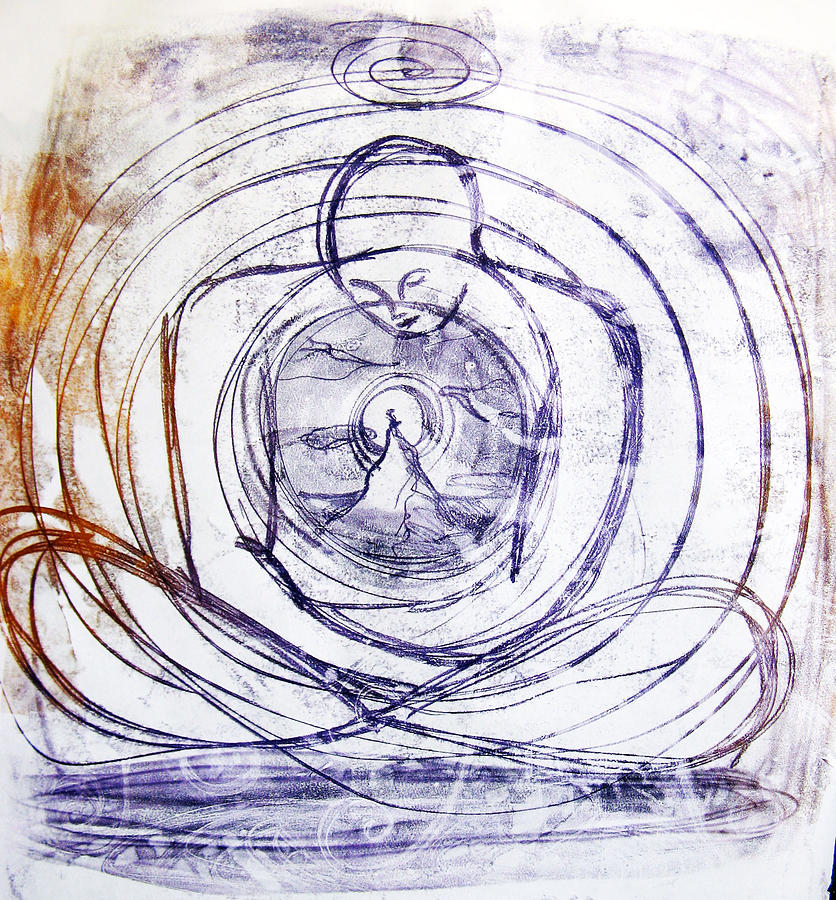
This beautiful piece is “Inward Focus”. I guess people with real talent don’t need a lot of words to impress others. https://fineartamerica.com/featured/inward-focus-khara-scott-bey.html

It’s an interesting question. How do we decide if something is or is not moral? There is obviously a varying standard, or it wouldn’t be a difficult question.

If we look at modern society, we can see the variety in religion, sexual variances, drug and alcohol use, marriage rights and childrearing. Even within religions, the differences are fairly significant. Abrahamic religions have 2 major sects in Judaism and Islam, with Father Abraham being coopted by the rest of Christianity. Catholicism has over 20 branches, and half a dozen rights, then there are Lutheran, and the Church of England. Protestant branches look like a kudzu vine in a windstorm. At the base, all of these belief systems, should have the same moral standards.

I have assumed that communities or societies mores are based primarily on the standard religious beliefs of the majority of the people. The variations seen in communities where religions are intermixed are understood by accommodations mutually agreed upon by them. Through growing up exposed to these ideals, a child internalizes the standards (or not) and bases his conduct on those standards. That’s where we get the sense of right and wrong, good and evil. The expression of morality is how an individuals conduct effects those around them.

As I was writing this, it occurred to me that there are societies and subcultures that aren’t influenced by or have rejected religious belief systems. Those that I have encountered were reduced to survival or subsistence, where good and evil could be defined as living and dying. At a survival level, the only good is what benefits me, and another’s value is determined by their contribution to my survival. If you work your way up through the family and community to a societal level, it will probably create an insular society.

I want to be the Bad Elf

Work with me here. Santa keeps a list of who is naughty and nice, right? Well, he’s busy so I suppose he has little elf helpers to do things like keep the Naughty and Nice list. The Nice list is full of boring people who never push the boundaries or have any “real” fun. I’m not interested in that list. I want the Naughty list.

The Naughty list would naturally be kept by a bad elf. The one who doesn’t make good toys or clean his room. He probably gets in trouble for joy-riding the reindeer and eating Santa’s cookies, too. Now, think about that list, full of troublemakers, the ones who color outside the lines and don’t want to follow the crown. Bad girls and boys. They are going to be interesting at the very least. I want to know who to keep an eye on in the future.

And, if Santa keeps a Naughty and Nice list for adults, I wouldn’t mind having a look at that while I was at it. It would make for an interesting dating app.

Happiness

I’m starting a little late, but I’ve recently been surprised that I’ve learned to be happy. My professional life was not in a pleasant field, with comforts abounding and I was often exposed to horrible things. My newfound happiness surprised me one day when for no reason, I was smiling. I’ve also experimented with becoming more open and less guarded with my feelings. Terrifying!

I’ve read that pleasure is merely the absence of pain. I’m not sure I believe that anymore. The absence of pain doesn’t produce the lightness of the spirit or desire to share the lightness I have come to recognize as happiness.

Daily writing prompt
What is the last thing you learned?

I have a question of Morals. (Morals 1)

I believe that the solution depends not on the definition, since both morals and ethics are interested in good and right conduct, but the focus of those standards. The easiest answer seems to be that morality is an internally focused set of standards, controlling what/why we act a certain way. We think of people with a moral compass and high or low moral standards. The quality may be judged by an external standard, but it is still internally focused.

Ethical conduct is the judgement of how good or fair our interaction with others is. The usage of the word is a strong indicator, ethics in the workplace or ethical conduct towards others, how do we treat others, based on a set of rules. As our society grows, it also seems that ethical conduct is judged legalistically, as opposed to morally.

The recent case of former President Trump, being charged civilly for an act that didn’t cause harm, reeks of unethical conduct. The case was not the result of criminality or complaint but appears to be nothing more than an attempt to keep a disagreeable person from becoming president again. Did the Judge act ethically to protect people from a perceived threat? Or was it simply an immoral act and abuse of power?

As tentative answers, I would like to suggest very simple definitions.

Morality – an internalized standard of conduct, normally propagated through society and religion.

Ethics – a legalistic and externally focused standard of conduct, judged by interactions.

Good – the amount of benefit or joy produced by an action.

Right – A correct action taken without reference to the benefit produced.